

Credit Checks for Dutch Individuals
Assessing creditworthiness using relevant data from public and official sources
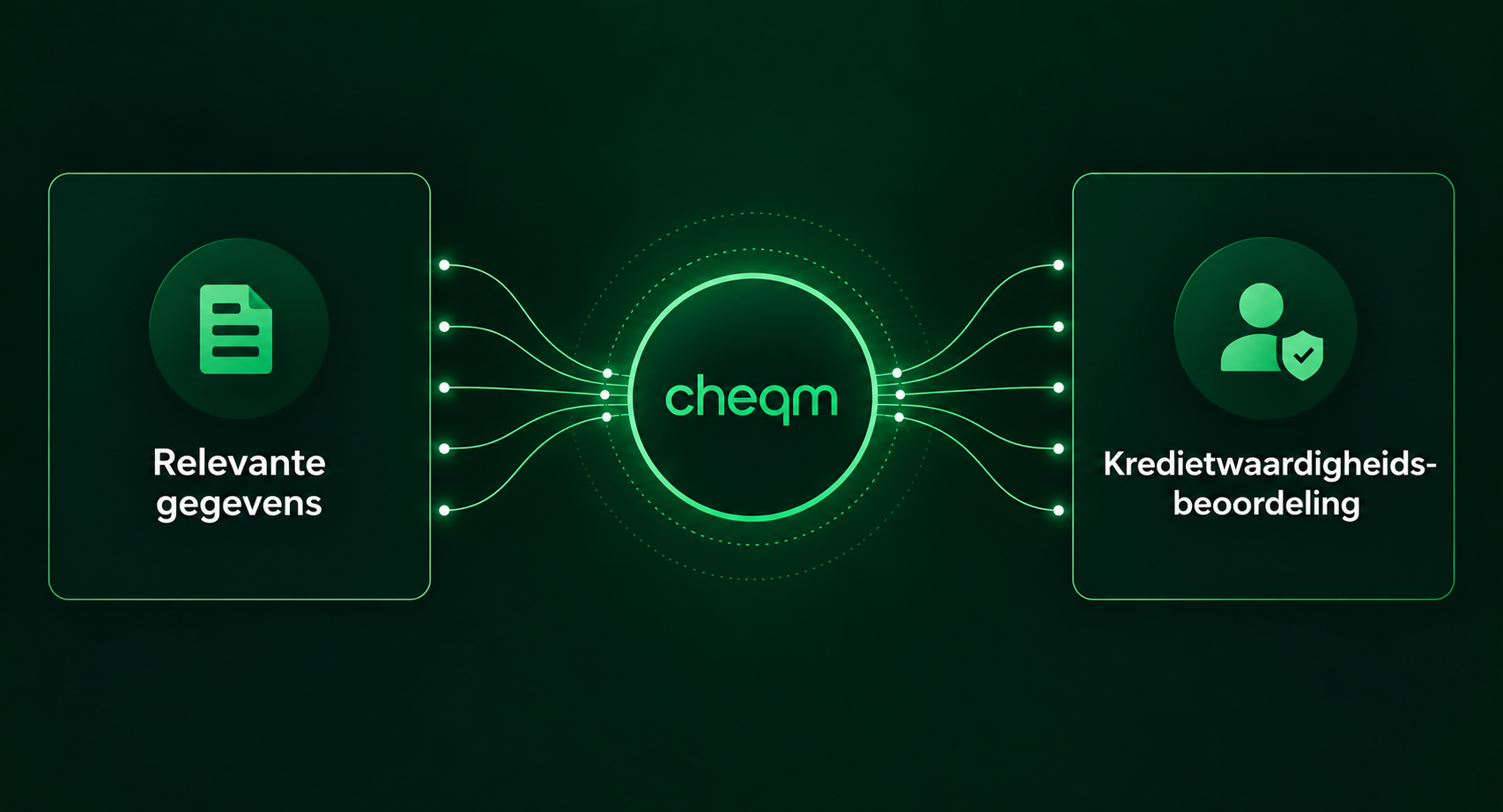
Do you want to assess a private customer’s creditworthiness before entering into an agreement? Cheqm helps organizations consult, structure, and interpret relevant financial and legal risk indicators. Through our data platform, data from selected public and official sources can be accessed and integrated into your existing customer onboarding process.
Whether it’s a subscription, payment on account, financing application, or another financial obligation, having relevant information allows you to make more informed decisions.
Cheqm supports your credit check. You determine the acceptance policy and make the final decision.
What is a credit check for individuals?
A credit check, also known as a credit assessment or creditworthiness check, helps organizations evaluate potential payment risks associated with a consumer customer. A creditworthiness assessment can be part of a thorough underwriting process, for example, when a customer purchases a product or service that is paid for after the fact.
Depending on the application, information from various legally accessible sources may be used. Cheqm helps organizations efficiently make relevant data available for their own creditworthiness assessments.
Assessing Creditworthiness Using Public Sources
Not every credit check needs to be based solely on information from private credit registries. Public and official sources may also contain relevant information about circumstances that are important for a creditworthiness assessment.
Depending on the law, availability, and purpose of the check, this may include, for example:
Insolvency data: relevant information about bankruptcies and statutory debt restructuring arrangements.
Administrative guardianship and conservatorship: available records, to the extent that consultation and use for the specific purpose are permitted.
Other official records: relevant data from sources that are lawfully accessible for the creditworthiness assessment in question.
Cheqm supports the retrieval and combination of relevant data. Which data is used depends on the purpose of the check, the available sources, and the applicable legal conditions.
Credit Checks and the GDPR
When assessing the creditworthiness of individuals, personal data is processed. Therefore, careful design of the process is essential. The General Data Protection Regulation (GDPR) sets requirements regarding, among other things, the legal basis, purpose limitation, necessity, proportionality, transparency, and retention periods. This also applies to personal data from public records.
Data minimization: Use only data that is necessary for the purpose of the assessment.Transparency and origin: provide insight into the data sources used and the meaning of the data.
Purpose-limited processing: Tailor data access to the approval process and the risk.
In-house acceptance policy: the client determines the criteria and makes the final decision.
The division of GDPR responsibilities between Cheqm and the client is determined based on the actual processing and the agreed-upon services.
Credit check or affordability check?
Credit check
Insight into relevant risk indicators
A credit check supports the assessment of potential payment risks based on relevant data from legally accessible sources. This information can be used for customer onboarding, subscriptions, payment on account, and other financial obligations.
Affordability Check
Insight into current payment capacity
Would you also liketo assesswhether aretail customercan actually meet a financialobligation? With the Cheqm Affordability Check ,relevantaccount datacanbeaccessedvia Open Bankingafter the account holder has granted the required authorization for access.Depending onthe available data, insights can be gained into income, expenses, fixed costs, and cash flow. Additionally, an appropriate GDPR legal basis is required for further processing.

Integrating Credit Checks via API
Cheqm helps organizations make relevant data from multiple sources accessible through technical integration. Our API can be connected to existing systems for digital onboarding, customer acceptance, and risk management.
-
Less manual data retrieval.
-
More efficient customer onboarding processes.
-
Consistent processing of relevant information.
-
Flexible application within your own risk policy.
-
Consult additional sources when necessary and permitted.
For which organizations are credit checks suitable?
- Telecom and subscription services: payment risks associated with new customers.
- Energy companies: information for customer onboarding and risk management.
- E-commerce and payment on account: risk indicators for post-purchase payments.
- Banks and financial services: supplementary information for customer approval.
- Rental and leasing: potential payment risks associated with financial obligations.

WhyCheqm?
- Relevant public and official sources for creditworthiness assessments.
- API-first data platform for onboarding and underwriting systems.
- Focus on privacy, purpose limitation, and data minimization.
- Flexible use of sources depending on the purpose and applicable conditions.
- From data to risk decisioning: applying information within your own risk policy.